Thursday, January 22, 2015

Marijuana Bandwagon Rolls Along And That's (Mostly) A Good Thing

APOCALYPTIC LEAFLET IN A BUFFALO, NEW YORK STORE WINDOW (1967)
There is some good news amid the torrent of police shootings, terrorist attacks a little too close to home for comfort, travails of the middle class and the blatherings of a dysfuctional political establishment: The embrace of gay rights and abolition of draconian marijuana laws have accelerated at breathtaking speed in a society in which positive change comes with a painful slowness, if at all.

These seismic shifts have a common denominator: They make sense. 

A majority of Americans endorse gay rights, including support of same sex marriage, and are in favor of decriminalization, if not outright legalization, of marijuana because they know that there is nothing inherently wrong with homosexuality or smoking marijuana despite religious and legal prohibitions, and in the case of pot, penalties for even simple possession that do not begin to fit the "crime" that are a result of decades of federal government-sponsored misinformation, scare tactics and fear mongering.

There also is a huge difference in these seismic shifts: Money.

While it is the right thing to do, no one is going to make a buck because gays are afforded the same legal rights as straights, while a growing number of state and local governments, as well as entrepreneurs looking for the next big thing, see financial windfalls in licensing and taxing marijuana cultivation and sales, and permitting the sale of food and beverages with pot as an ingredient.
An astounding (for this old head, anyway) 23 states and the District of Columbia have at least decriminalized marijuana possession.  Colorado, Oregon and Washington state have legalized pot and licensed its sale outright, nine states have both medical and decriminalization laws, eight states have medical laws, and four states -- including usually neolithic Alabama -- have decriminalization laws.  And more are about to join the crowd.   Alaska, Arizona, California, New Hampshire and Nevada are on the short list of the next states to jump on the bandwagon.

* * * * *
Count Colorado Governor John Hickenlooper among the converts. 

Hickenlooper, 63, grew up in suburban Philadelphia in the 1960s and was bombarded from an early age with the familiar smorgasbord of government-pedaled lies: Marijuana makes people crazy.  It turns them into sociopaths, even murderers.  And it is a gateway to the harder stuff like cocaine and heroin.  While Hickenlooper would never admit as much, it is likely he smoked or at least tried pot at the Main Line boy's school he attended or later at Wesleyan University.  This was about the time a future president by the name of Bill Clinton was smoking but famously not inhaling.

And it is just as likely that none of the classmates of Hickenlooper and Clinton became poster kids for the propagandistic evils of the illegal weed while their elders were consuming so-called legal drugs, including pain- and reality-killing alcohol and pills.  The negative impact of their use and too often their abuse -- addiction, drunk driving, broken families, domestic abuse and divorce -- far outweighed the consequences of smoking the occasional joint and getting the midnight munchies.
Hickenlooper worked in Colorado as a geologist in the early 1980s and stayed.  He eventually got into politics and started a microbrewery in a trendy Denver neighborhood.  As his statewide profile grew, he came out against nascent efforts to soften the state's tough marijuana laws and opposed Amendment 64, the successful 2012 ballot measure legalizing cannabis for adults and allowing commercial cultivation, manufacture, and sale, as well as limited home cultivation, effectively regulating pot in a manner similar to alcohol.

Today Hickenlooper is a changed man and concedes that the consequences of letting people grow, sell, and consume pot without risking arrest have not been as bad as he feared.
 
"It seems like the people that were smoking before are mainly the people that are smoking now," the governor says. "If that's the case, what that means is that we're not going to have more drugged driving, or driving while high. We're not going to have some of those problems. But we are going to have a system where we’re actually regulating and taxing something, and keeping that money in the state of Colorado, and we’re not supporting a corrupt system of gangsters."
Legalization, licensing and taxing -- allowing anyone 21 or older to walk into a store and walk out with a bag of buds, a vapor pen loaded with cannabis oil, or a marijuana-infused snack -- has been a financial windfall for Colorado. A record $36.5 million flowed into state coffers in November 2014, the most recent month for which data are available, according to the Colorado Department of Revenue, which projects out to $438 million a year.  
Meanwhile, legalized marijuana has taken the investing world by storm as investors have bought into so-called marijuana stocks with enthusiasm, causing share prices to skyrocket.  According to Arcview Market Research, the industry generated $1.53 billion in revenues in 2013 and was expected to jump to $2.5 billion in 2014-- a robust 40 percent growth rate year over year -- primarily because of the widespread and growing decriminalization of medical marijuana.
* * * * *
Supreme Court Justice Louis Brandeis's legendary praise for states as the "laboratories of democracy" has gotten a vigorous workout as state after state has decided that beyond potential revenue windfalls, a ride on the bandwagon is preferable to continue to clog its court systems and prisons with penny-ante marijuana cases.

Indeed, the bandwagon had to get rolling somewhere, and even some politicians who oppose legalization have been comforted by the fact the federal government isn't driving it.  Lest investors think that the sky's the limit, the federal Drug Enforcement Agency is still occasionally raiding marijuana dispensaries in states that have decriminalized such businesses, and the incoming Congress is decidedly more conservative than its predecessors in terms of potentially legalizing marijuana at the federal level. 
But for the most part, the Justice Department has allowed the bandwagon to keep rolling.  
Last August, the deputy attorney general issued a formal -- though nonbinding -- assurance that the feds would take a mostly hands-off approach as long as state governments pursue "strong and effective" regulation to prevent activities such as distribution to minors, dealing by gangs and cartels, dealing other drugs, selling across state lines, and weapons possession.  Justice also has been quietly working with the Treasury Department to reinterpret banking laws to allow state-licensed pot businesses to have checking accounts and take credit cards, thereby avoiding the dangers inherent in cash-only businesses.

Washington Monthly writer Mark Kleiman has noted that the systems being put into place in Colorado, Oregon and Washington roughly resemble those imposed on alcohol after Prohibition ended in 1933.  That is, competitive commercial enterprises produce the marijuana and competitive commercial enterprises sell it. 
The post-Prohibition restrictions on alcohol worked reasonably well for a while, but have been substantially undermined over the years as the beer and liquor industries consolidated and used their economies of scale to lower production costs and their lobbying muscle to loosen regulations and keep taxes low. 
"The same will likely happen with cannabis," Kleiman warns. "As more and more states begin to legalize marijuana over the next few years, the cannabis industry will begin to get richer -- and that means it will start to wield considerably more political power, not only over the states but over national policy, too.
"That’s how we could get locked into a bad system in which the primary downside of legalizing pot -- increased drug abuse, especially by minors -- will be greater than it needs to be, and the benefits, including tax revenues, smaller than they could be. It's easy to imagine the cannabis equivalent of an Anheuser-Busch InBev peddling low-cost, high-octane cannabis in Super Bowl commercials. We can do better than that, but only if Congress takes action -- and soon."
I won't hold my breath waiting for Congress to do much of anything, and I happen to inhale.  
In fact, as someone who was introduced to the benign delights of the evil weed in the year that apocalyptic anti-marijuana sign appeared in a Buffalo store window (as in nearly 50 years ago, man) the trend toward legalization is welcome but still rankles this old head because of the tiresome tendency of capitalism -- whether in the form of states taxing a recreational drug that hurts no one to cannabis entrepreneurs selling to folks like me who just want to chill on their own terms -- to exploit people.
My not so secret hope is that because marijuana is so damned cheap and easy to grow (it's not nicknamed "weed" for nothing), it will get still cheaper and still easier to grow because of the legalization bandwagon, state revenue agents and Anheuser-Busch InBev be damned.
PHOTOGRAPH © BUD NEALY, USED BY PERMISSION

Friday, January 16, 2015

Thursday, January 15, 2015

L.A. Confidential For Real: The Twisted Tale of 'Black Dahlia Avenger'


(ORIGINALLY PUBLISHED IN 2012)
Sixty-eight years ago today, a 22-year-old beauty by the name of Elizabeth Short was found brutally slain in a vacant lot at 39th and Norton streets in Los Angeles. Her body was cut in half at the waist with surgical precision, her face and breasts slit, and there was a large gash where her vulva should have been. She had been drained of fluids as if prepared for an embalming and she was left in a garish pose, her head turned to the side and one arm above her body.
The case became known as the Black Dahlia Murder because Betty, as the wannabe actress liked to be called, wore her hair and clothes black.
The lurid crime shook Angelenos usually inured to the rampant crime in their midst, and a huge team of detectives was assigned to track down the perpetrator. Many suspects were pursued, but all were released and the case technically remains unsolved.
I'm somewhat of an armchair expert on the Black Dahlia Murder and have looked pretty deeply into it in connection with research on another brutual murder for my true-crime book, The Bottom of the Fox, that also does not lack for suspects and hasn't been solved.
I was involved in many homicide cases during a long newspaper career, and you haven't really lived until you've stood in a morgue and watched a coroner in a white lab coat open one of those stainless steel drawers and slide out a sheet-covered corpse. Yup, just like in the movies. I also have read dozens of criminology and forensic texts and true-crime books in order to steep myself in investigative methodology and police jargon for my own tome.
Steve Hodel's Black Dahlia Avenger: A Genius For Murder was the best of the true-crime books I read, although it may be the least well written.
As for literary pretension, it certainly cannot be compared to the Black Dahlia, the first of the novels in James Ellroy's acclaimed "L.A. Quartet" and the book on which The Black Dahlia, film director Brian De Palma's 2006 bomb, was based. But Hodel's Black Dahlia Avenger is in its own way an extraordinary stemwinder.
Here's the story:
Hodel was a career Los Angeles Police Department detective and a model of the good cop. He was retired in 1999 when Dr. George Hodel, the brilliant but troubled father from whom he had been estranged for most of his adult life, died at age 91.
Included in his father's personal effects was a small palm-sized photograph album. The doctor's wife -- the last of four -- thought that the son should have it.
Among the photos were Hodel as a child on his father's knee, Hodel's mother and two photos of a young Eurasian woman that Hodel, to his horror, recognized as Kiyo, his own former wife. Yet Kiyo is much younger in the photos than Hodel ever saw her and can only be a Kiyo whom his own father had known years earlier.
The mystery deepens when Hodel looks at two photos of another young woman -- a white woman with two flowers in her black hair, her eyes cast down. He wonders if she was asleep when the photos were taken. Or dead.
Hodel is struck by the face but can't remember why until he later realizes to his shock that the flowers are dahlias and the woman could be . . . you guessed it, Elizabeth Short.
George Hodel was tall, dark, suave, handsome and a connoisseur of fine art and women. He also was an abortionist and a devotee of the Marquis de Sade and Jack the Ripper.
He ran orgies in Steve Hodel's boyhood home frequented by avant-garde artist and photographer Man Ray, legendary film directors John Huston (who previously had been married to George Hodel's wife, Dorothy) and Orson Welles, among other notables. One orgy involved the gang rape of Steve Hodel's older half sister, Tamar. George beat the rape rap because he told the LAPD that Tamar had made the whole thing up. Investigators were notably uncurious about whether the well known doctor was lying.
Steve Hodel began working on the Black Dahlia case despite a lack of physical evidence, which was destroyed by bumbling and corrupt detectives trying to cover up an unrelated conspiracy involving crooked pols and gangsters and a number of notes possibly written by the murderer to throw them off the trail.
I am not spoiling the book by stating the obvious -- that the son came to believe that his father, acting out his obsession with De Sade and The Ripper, murdered Betty Short (who is shown atop this post with an autopsy photo superimposed). There also are intriguing indications that Wells may have been an accomplice, although Steve Hodel says he has found no evidence that he was.
Welles's alleged involvement is circumstantial but intriguing: Production of The Lady From Shanghai, the movie he was making, shut down on the day Short was murdered, the way she was mutilated is uncannily like that of a woman in The Lady, Short's body was found on a vacant lot once used by Welles's The Mercury Wonder Show, a circus in which he famously sawed a woman in half, Welles took out a passport a few days later, Short wrote in her diary of dining with a man called "George" (Welles's first name) at a restaurant he frequented, and most bizarrely of all, a few days before the murder he had applied to register as an assistant with a local mortuary.
Meanwhile, Hodel has published a sequel to Black Dahlia Avenger that sheds little new light, but do further cement the George Hodel-Elizabeth Short link.
PHOTOGRAPHS (From top): George Hodel and Elizabeth Short; Black Dalhia murder newspaper clipping; Detectives kneel over Short's body; One of the notes sent to police to throw them off the trail; Photos from George Hodel's album; Salvatore Dali with Man Ray; John Huston; Mia Kirshner as Short in DePalma's Black Dahlia.

Saturday, January 10, 2015

Walter Kühr (1955-2015)

AN ACCORDION EVANGELIST.  
MORE HERE.

Photograph by Don Hogan Charles/The New York Times

Friday, January 09, 2015

Saturday, January 03, 2015

A Musing On America's Dysfunctional Society & Broken Politics

The United States enters the new year a deeply dysfunctional society with a severely fractured political establishment and a dearth of ideas about how to confront either.  Police routinely abuse black men and men of all colors routinely abuse women.   The closing of the racial and gender gaps is a cruel fiction.  The gulf between rich and poor grows ever wider, while the so-called social safety net is in tatters.  It matters little that Barack Obama has been a godsend, because the president has been abandoned by fellow Democrats while Republicans, addicted to dog-whistle obstructionism and fighting old wars, have no clue as to how to help govern a nation out of perpetual crisis even if they wanted to.
Students of American history will find a certain perverse logic in this societal malaise, as well as why there are so many pols from both parties bellying up to the big trough called Capitol Hill where they gorge on the gifts bestowed on them in return doing the bidding of a powerful corporatocracy that has become a shadow government.  You know, Wall Street interests, defense interests, fossil-fuel energy interests, pharmaceutical interests, and so on and so forth.  Besides which, perpetually raising money to run for re-election is a jolly sight better than actually having to do anything to help a struggling middle class, rebuild a crumbling infrastructure and invest in stuff like education. 
Back in the day, the Founding Fathers declared that "All men are created equal," and there was no suggestion that they might have been alluding to the little women they went home to each night to powder their wigs for them after the exhausting job of trying to form a new republic.  In a knock down-drag out fight that has been going on for decades, women have clawed their way to a modicum of equality, even as many have chosen to continue to walk a step or two behind their husbands, and a woman may even become the next president.  Unfortunately for women, today's Republican Party and its handmaiden conservative Supreme Court majority have labored diligently to deny or take away many of the rights that men -- well, white men, anyway -- take for granted.  For them, having double standards is twice as good as having standards.  Meanwhile, Democrats work on perfecting their coward act.
As for blacks, the Founding Fathers struck a wink wink-nod nod deal that anything having to do with racial minorities, which is to say blacks who were routinely indentured, exploited and oppressed, which virtually all of them were at the time, would be ignored because the third-rail issue of slavery would wilt even the most heavily powdered wig and kill any hope of forming that new republic.  In a not dissimilar knock down-drag out fight to that waged by women, blacks also have clawed their way to a modicum of equality, and one is president.  And while overt racism has pretty much crawled into the shadows, a systemic and institutionalized racism persists.  The selfsame GOP and that high court majority, who like Shakespeare's Iago seem to revel in the pain they cause others, have worked hard to whittle away at blacks' achievements.  Meanwhile, Democrats work on perfecting their coward act.

* * * * *
I saw enough bad police behavior to last several lifetimes during the 21 years I worked for one of Philadelphia's two major daily newspapers.  This did not make the unjustified and widely publicized killings of black men by police officers in a St. Louis suburb and on Staten Island in the year past any less vile.  It merely reconfirmed for me that until the police in this country are brought under control, there can be no racial rapprochement.  That also applies to many police officers' lah-di-dah attitude about the abuse of women, something that is deeply enshrined in our culture whether you are white, black, Latino or Asian. 
During my two-plus decades in Philadelphia, officers routinely brutalized criminal suspects and innocents alike with little likelihood of their being sanctioned by their department, let alone charged with criminal offenses.  Efforts to reform the department through blue-ribbon panels, task forces and legislative fiats came and went with the seasons and today, 13 years after I left the City of Brotherly Love, its police department remains deeply corrupt and rogue officers -- taking advantage of a powerful police union, weak laws and compliant district attorneys -- continue to terrorize the communities they are sworn to protect.
What for me deeply complicates matters is that beyond the reality that race has never been easy to discuss in this country, even in the thoroughly integrated newsroom where I toiled in Philadelphia, the murders of Michael Brown in Ferguson and Eric Garner on Staten Island again showed that people find themselves forced to take sides. 
Because Brown had stolen a box of cigarillos from a convenience store, he was fair game for a fusillade of bullets from Officer Darren Wilson's revolver in the yes of many people. Garner died from a chokehold administered by Officer Daniel Panteleo, a clear violation of department regulations, while five other officers looked on, but the lines were no less blurred although Garner's "crime" was selling single cigarettes for a dollar each on the street.  If you were white and empathized with Brown or Garner, you were soft on criminals, or worse, a "nigger lover."  
An overriding lessons from these killings are that they are merely the tip of an immense iceberg, and that the criminal justice system, as we were reminded from the grand jury proceedings in both cases, is hard-wired to disenfranchise victims and their families, especially if they are black and poor, and to protect vested interests.

* * * * *
Isn't it stunning, just stunning, that in America today being a woman and being pregnant means you can be discriminated against by your employer?  Well not really, because we live in an era when the attack on women, whether it be matters of equality or reproductive and employment rights, is relentless.

Take the case of Peggy Young, who used to drive for a parcel delivery service.  When she became pregnant, her doctor recommended that she avoid lifting anything heavy.  Her employer responded by placing her on unpaid leave, and she lost her paycheck, disability benefits and pension.  Young's employer was not some mom-and-pop outfit.  It was the United Parcel Service, which has nearly 400,000 employees, raked in nearly $55 billion last year, and is one of the largest corporations in the U.S.  Young sued UPS under the federal Pregnancy Discrimination Act and the case percolated up to the U.S. Supreme Court, where she is almost sure to lose despite the fact that her dismissal was plain wrong, women make up 47 percent of labor force, and 62 percent of women who gave birth in 2013 were in that labor force.
There is ample precedent for the high court telling Young to shut up and go bake cookies because it already has smacked down women in cases involving equal pay, medical leave, abortion and contraception.  Kind of reminds you of one of those gender-obsessed Islamic states, doesn't it?


* * * * *
While a recent poll on Americans’ opinions on economic and financial issues found that only 64 percent of respondents said they still believed in the American Dream, the lowest result in  two decades, the overriding reason for there being a dearth of ideas on how to deal with our societal morass is that many people are deeply in denial.  They not only don't believe their country is in crisis, they still believe it is the best on earth.  This is not to ignore that the national snooze alarm does go off now and then: There were mostly peaceful demonstrations following the Brown and Garner grand jury belly flops and outrage over the Senate Intelligence Committee report detailing CIA depravities.  There does seem to be a new age of activism, although I have to wonder where these people were during the Iraq War.

The U.S. was indeed once an indisputably great country, and in some respects perhaps the greatest country.  I speak not of American Exceptionalism, the belief of neoconservatives and some fundamentalist Christians that God made this nation to spread liberty and democracy to the unwashed masses, in the case of the Iraq war, at point of gun.   I speak of a nation where prosperity and success could be attained through hard work, where there were myriad educational and job opportunities, where no infrastructure improvement, be it a dam, rail line or highway, was too ambitious, and where borders were open to people in pursuit of that American Dream.

But in recent decades America's standing has steadily eroded, and today it is indisputably no longer a great country, ranking at or near the bottom among the 17 industrialized nations in quality-of-life and other social measures.  
America is first by some measures, all of them negative: These include infant mortality, incarceration rates and anxiety disorders, as well as that gulf between the rich and everyone else that accelerated during the Bush Recession as the economy tanked and unemployment soared while CEOs and their corporations pocketed record stock dividends and profits.  (From 2009 to 2012, a mind-blowing 95 percent of new income went to the top 1 percent).  But by other measures, including life expectancy, despite by far the highest health-care costs in the world, as well as obesity, child poverty, commitment to infrastructure development, broadband access and arts funding, America ranks dead last or nearly so. 
How America stands in relation to other so-called civilized countries when it comes to police forces is . . . well, criminal. 
American cops shot and killed at least 450 people last year, a disproportionate number of them black men; no one is sure what the real number is because police departments are notoriously lax when it comes to reporting statistics that don't make them look good.  By comparison, cops in England shot no one last year.  Police forces in the U.S. have taken on a nasty paramilitary edge (what happened to community policing, fellas?), while SWAT team raids rose to 50,000 last year, way up from a mere 3,000 in 1980.  And does anyone believe that police departments need grenade launchers? 
If there is a common thread through all of this societal rot it is a rampant amorality, this in the churchgoing-est nation on Earth.  Would Jesus have tortured?

* * * * *
This hellbent race to the bottom ("We're Number 17! We're Number 17!") has been a group effort, but the three arms of government -- the executive, legislative and judicial branches -- that are supposed to be the custodians of our national interests must shoulder most of the blame, with a big helping left over for a complacent and compliant news media.

Nixon's excesses and Clinton's infidelities aside, the Bush-Cheney interregnum was not merely the darkest chapter in modern American history with its gross distortion of presidential power, it has remained a debilitating presence.  While Obama has suffered his share of self-inflicted wounds, as well as the slings and arrows of cruel Republicans and spineless Democrats, the toxic fallout from the first eight years of the decade has compromised his ability to lead America out of the morass.

Congress deserves the harshest criticism because it is so out of touch with all but the most affluent and powerful Americans, as well as that corporatocracy.  When I recently reread David Halberstam's The Best and the Brightest, I was struck by how President Johnson and his advisers had to escalate the Vietnam War by stealth because Congress would never have approved massive troop increases and a sustained bombing campaign because the American people would not have supported them.  Contrast that with how Congress has rolled over on gun control again and again in fawning obeisance to the National Rifle Association, America's largest terrorist organization. Never mind that many of us favor toughening weak federal laws and demanded action in the wake of the Sandy Hook and other massacres made possible because of the wide availability of assault weapons, the sole purpose of which is to kill people.  Yes, many of us also recognize that the epidemic of shoot-and-kill incidents by police is a direct consequence of our gun-sick culture.

Meanwhile, the Supreme Court has become a branch of the Republican Party and the lapdog of the plutocracy, its hackery evident in decisions from Citizens United to enshrining workplace discrimination and validating civil liberties abuses such as voter disenfranchisement, to protecting Big Pharma from liability for killer drugs and medical devices.


* * * * *
It was a Come to Jesus, or perhaps a Come to Vladimir moment:
Russian television networks gleefully leading their newscasts with footage from Ferguson as protesters took to the streets, first after the Brown shooting and then after a grand jury was manipulated into the decision to not charge Officer Wilson, some hurtling rocks at riot police, others torching and overturning cars, and still others looting stores.  After absorbing a steady diet of assertions from Washington for years that the Russian government abuses its citizens and denies them fundamental human rights, the shoe was on the other foot. 

And damned if it wasn't a perfect fit.
IMAGE: "TATTERED AND TORN" BY JAMES DAVID FENICIE 
© 2010, IMAGE USED WITH AUTHOR'S PERMISSION

Wednesday, December 10, 2014

The CIA's Nonpareil 60-Year Record Of Compromising National Security

THE CIA LEARNED OF THE FALL OF THE BERLIN WALL ON CNN
I have long advocated abolishing the Central Intelligence Agency, or as President Kennedy put it after the CIA played an integral role in the Bay of Pigs debacle, smashing it into a thousand pieces and scattering it to the winds.

The CIA survives and prospers, of course, because despite its decades-long history of monumental screw-ups, it has friends in high places: President George H.W. Bush was once CIA director, and we know all about his prodigal son.  These forces were hard at work in watering down and pushing back against the Senate Intelligence Committee's just-released report on the agency's depravities at its system of "black sites," prisons overseas where terror suspects were routinely tortured and sometimes murdered. 
The CIA has had some successes: It accurately predicted the 1967 Six-Day War in the Middle East, waged a successful cyber warfare campaign against a Soviet espionage team in the mid-1980s, and precipitated the exit of the Soviets from Afghanistan, which it then botched by failing to anticipate the rise of the Taliban. 
A brief list of the CIA's nonpareil record in compromising national security, something it is supposed to protect:
* The 1950 Chinese invasion of Korea.
* The 1959 takeover of Cuba by Fidel Castro.
* The 1963 Cuban missile crisis.
* The strength of and support for the North Vietnamese and Viet Cong in the 1960s.  
* The 1979 ouster of the Shah, Iranian revolution and rise of the ayatollahs.  
* The 1979 Soviet invasion of Afghanistan.  
* The fall of the Berlin Wall in 1989 and subsequent collapse of the Soviet Union.
* Denying in 1990 that Saddam Hussein planned to invade Kuwait.
* The coming of Osama bin Laden, Al Qaeda and the global Islamic jihad in the mid-1990s. 
* The 1998 explosion of a nuclear bomb by India, which remade the balance of power.  
* The 9/11 attacks.
* That the pre-2003 invasion claims of Saddam Hussein that he had WMD were false.

Support For Torture Creeps Up, But Many Of Us Remain Ambivalent

HAT TIP TO ANDREW SULLIVAN AT THE DISH

Stick It Up The CIA's Ass: Please Sign This Very Worthy Petition

As I noted in this post, the terrific biopic Kill The Messenger has not exactly been a box office hit although its subject is worthy -- and timely as well because of the just-released Senate Intelligence Committee's report on CIA torture abuses -- and has sunk like a stone.
"This movie starts a conversation about racism, government abuse, and attempts to silence whistleblowers -- a conversation that everyone should be having in our country, and that could not be more relevant and critical to our current society," says one advocate for the film.
There's now a petition drive to get Kill The Messenger back in theaters.  Sign it, okay?

Tuesday, December 09, 2014

Accountability Goes Bye-Bye As Senate Torture Report Finally Is Released

The release today of the executive summary of the Senate Intelligence Committee's report on the CIA's network of secret prisons where terrorism suspects were tortured with the approval of President Bush and his henchmen in violation of American law and the Geneva Conventions is surely one of the greatest anticlimaxes in American history, as well as the last hope of accountability for what I have come to call the Bush Torture Regime.
Virtually nothing in the 524-page summary, while scathing, is new.  Its impact is blunted because it is heavily redacted so as not to identify individual CIA officers and agents, embarrass foreign governments who rolled out the red carpet for Uncle Sam's torturers, as well as a juicy detail here and there. 
As shocking as the revelations that Americans routinely used Nazi torture techniques may have been at one time, and in the absence of evidence that torturing suspects produced valuable information, let alone lead the U.S. to Osama bin Laden, something that the Senate report notes, the steady drip-drip of magazine and newspaper articles, blog posts, International Red Cross reports, lawsuits and the occasional if rare statement by a fearless public official has blunted its impact some 13 years after the 9/11 attacks unleashed these horrors.  Remember Abu Ghraib?  Still revolted by it?  I didn't think so.
Nevertheless, the report still was stomach turning, especially in detailing the CIA's interrogation techniques, which were approved by the agency's medical staff.
Beyond waterboarding, to which many more detainees were subjected than the mere three the CIA claimed, detainees were imprisoned in small boxes, slapped and punched, deprived of sleep for as long as a week and were sometimes told that they would be killed, their children maimed and their mothers sexually assaulted.  Some were subjected to medically unnecessary "rectal feeding" -- a technique that the C.I.A.'s chief of interrogations described as a way to exert "total control over the detainee."
The report, which was compiled by Democratic staff members of the Intelligence Committee with no Republican help after its initial stages, further confirms that the CIA was beset by infighting, dysfunction and deception. The torture was so extreme at times that some CIA personnel tried to put a halt to the techniques, but were told by senior agency officials to mind their own business and carry on even after one detainee was murdered.
Forget about Bush, Vice President Cheney and the government minions who sought to put a veneer of respectability on the use of brutal interrogation techniques when, the report notes, they were completely out of the loop, then denied their use and scrambled to distance themselves from the legal jabberwocky they concocted to justify these techniques, being called to account.

As recently as Monday, Cheney defended torture as "absolutely, totally justified." Republicans with a few exceptions, notably Senator John McCain, who himself was tortured for years in a North Vietnamese prison, say the report is a partisan hack job while the right-wing media machine swung into action, acting as though the report and not the torture itself was bad for America, as well as claims that the report would "alienate" America's much-needed allies.  
Bush was roused from his post-presidential somnambulance to join former intelligence officials in challenging the report's conclusions even before it was released although those conclusions are beyond reasonable dispute. And if they and Cheney had no problem with torture and actually believed it to be "humane," as the former president famously put it, why do they now have a problem with releasing the report?  Of what are they so afraid?
Meanwhile, Attorney General Holder was instructed by President Obama to consider prosecuting only those who actually tortured since its use had been approved by CIA leaders and the Bush administration.  No criminal charges were brought.
Why have I and everyone else who has closely followed the torture regime and its fallout correctly assumed that no one of consequence would be held accountable for this darkest of eras?

Because anyone who thought that Obama, having said boo about torture while campaigning for president in 2008, would denounce it after taking office was engaging in fuzzy-wuzzy liberal thinking.  For one thing, the new president understood that denouncing, let alone going after Bush and his enablers for their crimes, would scuttle any chance he had of forging a bipartisan consensus for his ambitious first-term agenda.  But even this Obama supporter is deeply disappointed at how unwilling the president has been to lay bare the regime's excesses even if stopping short of even suggesting its architects should be prosecuted.
Obama's endorsement, by his silence, of the CIA's lengthy obstruction of the Senate Intelligence Committee's release of a report without redactions is nothing less than protecting the perpetrators and legitimization of that agency's vile practices.  His defense of CIA Director John Brennan, who led the campaign to stymie release of the report while tacitly approving the rogue agency's own spying on the Senate committee, makes farcical the president's statements that he believes that the U.S. should hew to international law, including the Geneva Conventions.
America's moral standing in the world community was squandered during the Bush interregnum.  That Obama has allowed the release of a report that has been watered down by some of the perps themselves, puts that standing beyond repair.  Yes, some of the men tortured by the CIA were dangerous -- very dangerous --  but the CIA's gruesome tactics have provided a ready recruiting tool for terrorists and further exposed American soldiers, journalists and others to the enmity that our refusal to come to terms with these depravities will provoke.

Friday, December 05, 2014

'Just Because They're Dead Don't Mean They're Republicans'

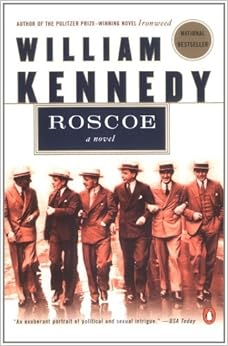
In the opening pages of William Kennedy's Roscoe: A Novel, Felix Conway, the éminence grise of the fabled Albany, New York, Democratic machine, advises Roscoe Conway on how the game is played.  It is 1945:
"How do you get the money, boy? If you run 'em for office and they win, you charge 'em a year's wages.  Keep taxes low, but if you have to raise 'em, call it something else.  The city can't do without vice, so pinch the pimps and milk the madams.  Anybody that sells the flesh, tax 'em.  If anybody wants city business,, thirty percent back to us.  Maintain the streets and sewers, but don't overdo it.  Well-lit streets discourage sin, but don't overdo it.  If they play craps, poker, or blackjack, cut the game.  If they play faro or roulette, cut it double.  Opium is the opiate of the depraved, but if they want it, see that they get it, and tax those lowlife bastards.  If they keep their dance halls open twenty-four hours, tax 'em twice.  If they run a gyp joint, tax 'em triple.  If they send prisoners to our jail, charge 'em rent, at hotel prices.  Keep the cops happy and let 'em have a piece of the pie.  A small piece.  Never buy anything that you can rent forever.  If you pave a street, a three-cent brick should be worth thirty cents to the city.  Pave every street with a church on it.  Cultivate priests and acquire the bishop.  Encourage parents to send their kids to Catholic schools, it lowers the public-school budget.  When in doubt, appoint another judge, and pay him enough so's he don't have to shake down the lawyers.  Cultivate lawyers.  They know how its done and will do it.  Control the district attorney and never let him go; for he controls the grand juries.  Make friend with millionaires and give 'em what they need.  Any traction company is a good traction company, and the same goes for electricity.  If you build a viaduct, make the contractor your partner.  Whenever you confront a monopoly, acquire it.  Open an insurance company and make sure anybody doing city business buys a nice policy.  If you don't know diddle about insurance, open a brewery and make 'em buy your beer.  Give your friends jobs, but at a price, and make new friends every day.  Let the sheriff buy anything he wants for the jail.  Never stop a ward leader from stealing; it's what keeps him honest.  Keep your plumbers and electricians working, and remember it takes three men to change a wire.  Republicans are all right as long as they're on our payroll.  A city job should raise a man's dignity but not his wages.  Anybody on our payroll pays us dues, three percent of the yearly salary, which is nice.  But if they're on that new civil service and won't pay and you can't fire 'em, transfer 'em to the dump.  If you find people who like to vote, let 'em.  Don't be afraid to spend money for votes on Election Day.  It's a godsend to the poor, and good for business; but make it old bills, ones and twos, or they get suspicious.  And only give 'em out in the river wards, never uptown.  If an uptown voter won't register Democrat, raise his taxes.  If he fights the raise, make him hire one of our lawyers to reduce it in court.  Once it's lowered, raise it again next year.  Knock on every door and find out if they're sick or pregnant or simpleminded, and vote 'em.  If they're breathing, take 'em to the polls.  If they won't go, threaten 'em.  Find out who's dead and who's dying, which is as good as dead, and vote 'em.  There's a hell of a lot of dead and they never complain.  The opposition might cry fraud but let 'em prove it after the election.  People say voting the dead is immoral, but what the hell, if they're alive they'd all be Democrats.  Just because they're dead don't mean they're Republicans."
Do you think things have really changed all that much?

From Roscoe: A Novel © 2002 by William Kennedy