JOHN LENNON
(October 9, 1940 ~ December 8, 1980)

If there was any question that the Pennsylvania State Police-led manhunt for cop killer Eric Frein was in big trouble -- indeed, that the trail for the marksman-survivalist in the northeastern Pennsylvania woodlands may have gone cold -- a photograph on the front page of the Pocono Record on Monday, the 17th day of the search, betrayed a harsh truth. And now, to make a bad situation worse as the manhunt drags on and state police encounter the first murmurs of public criticism, they find themselves having little choice but to outrage perhaps the most influential constituency in the region -- hunters.
The Pocono Record photograph showed troopers clad in camouflage and SWAT
team mufti preparing to search a vacant cabin for Frein. The cabin was not one of many that dot the woodlands, which already had been searched, but was on a well-traveled state road, not exactly the kind of place that a crafty, if troubled, 31-year-old charged with criminal homicide who likes to dress up like a Serbian soldier and play war games would choose.
State police clearly are at the end of their rope -- or nearly so.
Frein shot and killed state police Corporal Bryon Dickson and wounded Trooper Alex Douglass on September 12 in a sniper-style attack in the late evening darkness as they changed shifts at a barracks in Blooming Grove, a small Pike County community about 20 miles north northeast of Frein's parents' house in the village of Canadensis in Monroe County. The self-trained backwoods survivalist crashed his Jeep near Blooming Grove and is believed to have hiked south southwestward through nearly unspoiled forest to an area not far from where his parents live.
State police had set themselves up for failure -- or at least a frustratingly long search -- by taunting Frein in public pronouncements and repeatedly boasting that they were closing in on him. Lieutenant Colonel George Bivens, the lead state police spokesman, declared at one point that trackers, which include FBI agents, local police and dogs in addition to troopers and number about a thousand officers in all, had confined Frein to a one-square mile area and had him surrounded.
As the dragnet dragged on, the area increased to five-square miles and then Bivens' "We know where you are and we're coming get to you" boasts stopped altogether. Frein has appeared to be taunting back, hanging an AK-47-style assault rifle from a tree trunk in plain view that is believed to be his, while leaving a trail of butts from Serbian cigarettes and perhaps soiled diapers, as well.
Some 20 days after the murder, the impression grows and has begun to be voiced by a few people in a community that has showed overwhelming support for the state police despite myriad inconveniences caused by their manhunt, including residents being forced to stay away from their homes for days: Had the murder victim been one of them, the manhunt already would have been called off or there would not even have been one.
The state police also have struggled to stay on message.
Asked about rumors that Frein's sister had a relationship with Trooper Douglass, Bivens initially denied they had "an inappropriate relationship," which ginned up the rumor mill even more. Bivens later sought to clarify matters by stating they had not had any kind of a relationship and did not even know one another, but the impression lingers that despite Frein's well-documented hatred of police in general, he did not pick out Douglass at random with plenty of other law-enforcement targets closer to home.
And a state police report that Frein had been leaving behind soiled diapers was called into question.
While well-trained snipers wear diapers because of the many hours they sometimes have to wait for their prey without moving, area residents well familiar with the many black bears who populate the woodlands, noted that it was not unusual for bears to drag bags with household waste, including soiled diapers, into the woods. This may have prompted a cryptic state police statement released Friday, unusual in and of itself, stating that they would not comment on any possible evidence.
Pennsylvania Governor Tom Corbett has appeared at Dickson's funeral, a state police press conference and other Frein-related news events, but that has failed to resuscitate an re-election campaign that is running on empty because of his slash-and-burn cuts to the state education budget and lingering questions about whether he foot-dragged on the Jerry Sandusky-Penn State sex scandal while attorney general.
Bivens has said Frein was spotted by trackers at a distance around dusk on the evening of September 22 while being tracked by dogs, and trackers detonated a flash-bang device. He said a helicopter was overhead but could not follow Frein because of the thick forest canopy, and he was able to slip away. There were unconfirmed reports of another spotting on Monday.
The spokesman has explained the failure of apprehend Frein by noting there are numerous caves in the woodlands, trackers are taking their time clearing them because Frein is considered armed and dangerous, while there is concern that because two pipe bombs have been found in the search area and because Frein has experimented with explosives in the past, he could have booby-trapped the area or is capable of another sniper attack.
"I'm calling on you, Eric, to surrender," Biven said at a Tuesday afternoon press conference. "We continue to take your supplies and weapons stockpiles . . . We are not going anywhere."
There was a certain inevitability that a man accused of killing a cop in cold blood would become a cult hero. There are several Facebook pages in Frein's honor, including one called "Eric Frein Is God," and a rap tribute on YouTube.
The search turned tragicomic on Wednesday night when two state troopers fell 20 feet from a tree stand during the search and were injured. They were flown to a Lehigh Valley hospital, treated and released, which provoked additional criticism because the injuries appeared to be minor.
Perhaps Frein will have been been apprehended by the time you read this. Or gunned down while refusing to surrender. Or has taken the coward's way out by killing himself. Let's hope so.
But the Pennsylvania State Police historically has been a troubled and scandal-plagued agency long on boastfulness and short on accomplishments, the most recent scandal enveloping none other than State Police Superintendent Frank Noonan, who sent and received hundreds of sexually explicit photos, videos and messages from his state e-mail account. In other words, pornography. Talk about role models.
Given the state police's history, the failure to find Frein comes as no surprise. Nor does the abysmal coverage of the Pocono Record, which has been gifted an international story right in its front yard but has rolled over and allowed out-of-town media to break the big stories, such as they are, while dutifully kowtowing to the state police and officialdom, taking everything they have said at face value with nary a skeptical question asked, let alone published, as it has become increasing obvious that the massively expensive operation to bring Frein to ground has been unraveling.
Not a single Record story in the last three weeks has showed the kind of initiative and doggedness that has allowed the Scranton Times-Tribune, Allentown Morning Call, Philadelphia Inquirer, New York Times and the television news networks to run circles around it.
THE POCONOS TAKE ANOTHER HIT
The manhunt could not have come at a worse time for the Poconos.
The Monroe County economy crapped out long before the rest of the nation, and for a while it led all counties nationwide in home foreclosures per capita. This is because local bigs, not content to try to build the tourist industry and brand the Poconos as a special place with beautiful woodlands chockablock with trails, waterfalls, creek and rivers, as well as golf courses, ski slopes and family friendly resorts, climbed into bed with rapacious developers and usurious financial institutions after the 9/11 attacks to sell the Poconos as a safe haven from a world gone crazy.
(Not surprisingly, although Frein fits the definition to a T, the news media is up to it's usual name-game bull in calling him everything other than what he is -- a terror-freaking-ist, because he is an American and doesn't wear funny clothes and worship a false God.)
Anyhow, people flocked to the area from the Bronx, Queens and northern New Jersey by the thousands after 9/11, but the gauzy illusion that the Poconos was some sort of paradise soon gave way to a harsh reality of which wise locals were all too aware: There was an apathetic political establishment resistant to reform, many roads and bridges were in atrocious condition, social services were overtaxed, schools ranged from mediocre to poor, rates were well above state county-by-county averages for adult major crime, drunk driving and vehicular fatalities, an increasingly degraded environment, and stratospherically high local tax rates that have been crushing to all but the relatively few affluent residents.
Many of the homes built for new arrivals were substandard, many of the people who bought them were marginally solvent and easy prey for unscrupulous mortgage companies -- and there were no decent jobs.
Politicians' post-9/11 promises that a major complex of financial institutions that they dubbed Wall Street West would be built in the Poconos and long-moribund passenger rail service would be restored between the region and New York City were so much hot air.
Virtually the only jobs were and remain minimum wage -- dishwashers, groundskeepers, chambermaids and burger flippers -- while the commute to and from North Jersey and New York City and decent paying jobs is a killer; in fact, it is regularly described as the worst commute in the nation by rating services. Fickle educators went on a school building binge as a result of the population explosion, but today some schools have been shuttered and teachers furloughed. A reverse migration has kicked in as many of the same people who were lured by false promises have retreated back to where they had come from -- foreclosed on, broke and broken.
Meanwhile, the manhunt comes when fall foliage, an attraction for day trippers and other tourists, is kicking in early because of a dry summer. It promises to be spectacular.
Inn keepers and restaurateurs report lousy to nonexistent business. And don't mind that huge image of Frein, with a smirking mug and Serbian army hat, his inclusion on the FBI's Most Wanted List duly noted, on a huge electronic billboard at the Delaware River Toll Bridge on Interstate 80, the eastern and most heavily used portal to the Poconos. (There is nary a peep about the manhunt, let alone the fact that much of the region remains open for visitors, on the website of the reliably somnambulant Pocono Mountain Visitors Bureau, the lead tourism agency.)
Then there is the fall hunting season, an annual orgy of wildlife carnage in a gun-crazy region where public schools still close on the first day of gun deer season and tables, lunch counters and bars at pubs, roadhouses and diners usually glow hunter orange from the beginning of deer bow season, which opens on Saturday, followed by seasons for deer and elk, squirrel, rabbit and hare, and various wildfowl that run through to the end of December.
State police initially green-lighted hunting in even the deepest woods once the seasons opened, but on Wednesday the state Game Commission had second thoughts and banned hunting in a huge area in seven townships that is substantially larger than the area where the manhunt is ongoing.
It is hard to imagine a more incompatible mix: Hunters armed to the teeth filling woodlands teeming with state troopers armed to the teeth, but the Game Commission edict has provoked outrage from both casual hunters and hunters who rely on filling their freezers with venison and other game to make it through harsh winters.
"Thank you Pa. Game Commission for making it official, one indignant hunter declared. "The police have been lying to us about knowing the general area where Frein is. I understand them closing the area where they claim he is . . . yet they want the game commission to close such a massive area. I support the police for putting their lives on the line, but the higher up's are not being honest with the public."
"If anybody should be honest and straightforward with the public it is the police," said another resident. "I have been supportive of the police from the start, but that support is wearing thin other than wishing them good luck and safe going."
I reveal how the Pennsylvania State Police, aided and abetted by an indifferent criminal-justice establishment, blew a high-profile Poconos murder and botched several other murders in my 2010 book, The Bottom of the Fox: A True Story of Love, Devotion & Cold-Blooded Murder. The book is available online in trade paperback and Kindle versions at Amazon and at Barnes & Nobles and other online booksellers.* * * * *
If you live in the Greater Philadelphia-Baltimore Co-Prosperity Sphere and have some time to kill on Sunday (September 28), here's a special event for you: I will be signing copies of There's A House In The Land, my just-published saga of the 1970s, beginning at 1pm and again at 8pm at the Blue Crab Grill in Suburban Plaza, a mere two miles from Interstate 95 in Newark, Delaware.
The event also will feature a reunion of Snakegrinder and the Shredded Fieldmice, a psychedelic-tinged band with a song from which I stole a lyric for the title of the book. And the Blue Crab has a wonderful menu of seafood and other delectables to die for.
In addition to copies of There's A House and The Bottom of the Fox, my previous opus, Snakegrinder CDs and commemorative postcards will be for sale.
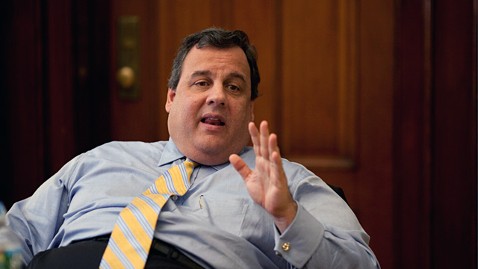
There has been much happy talk among Republicans hoping for -- no, make that desperate for -- a moderate nominee to take on Hillary Clinton in 2016 since federal investigators have been unable to link New Jersey Governor Chris Christie to Bridgegate, the public-safety mess resulting from the closing of several lanes leading to the George Washington Bridge in Fort Lee in retaliation for the mayor of that fair burg not backing the governor in his re-election bid. The feds say their probe is "very much ongoing," but barring a key aide who might flip and provide the smoking gun prosecutors have lacked, Christie is likely to skate.
But the jubilation is misplaced because even with the obstacle of a criminal indictment removed and his well-known penchant for bullying and political revenge-seeking like Bridgegate put aside, Christie arguably has an even bigger problem: He has trashed New Jersey's economy, in large part because of cooking the books and a co-mingling of official businesses and GOP favoritism extraordinary even in a state where the official motto might as well be "Pay to Play."
Not only can Christie not point to economic success back home as did then-Texas Governor George W. Bush when he ran for president in 2000, but his opponents in the grueling GOP primary season and presidential election can note that New Jersey's credit rating has been downgraded eight times on Christie's watch -- more than under any governor in the state's history.
In the eighth downgrading earlier this month, Standard & Poors belabored the obvious in stating that "New Jersey continues to struggle with structural imbalance . . . New Jersey will face increased long-term pressures in managing its long-term liabilities, and that the revenue and expenditure misalignment will grow based on reduced funding of the state's unfunded actuarial accrued liability."
Translation: Borrowers will impose even higher interest rates on a state under the budgetary gun when they lend it money to finance schools, which already are underfunded, and fix roads and bridges, which are a mess.
It gets worse: Since Christie took office in January 2010, private-sector job creation in New Jersey has increased by only 3.8 percent -- tied for second worst in the nation with the basket case known as Mississippi.
The New Jersey job growth rate is far more anemic than in Indiana (led by potential GOP presidential contender Mike Pence), Louisiana (Bobby Jindal), Texas (Rick Perry), Wisconsin (Scott Walker), and Ohio (John Kasich), and all five of those states have unemployment rates lower than the Garden State's 6.6 percent, which is half a percent higher than the national average.
My blogger friend Will Bunch nails it when he calls what Christie has done over the last five years a political Ponzi scheme in which money, tax breaks and other perks have been steered to his Republican cronies and other friends, all at the expense of New Jersey's suffering middle class and Mississippi-caliber poor.
To wit:
* Christie ripped off hundreds of millions of dollars originally designated for a badly-need commuter rail tunnel under the Hudson River to Manhattan to pay for the state's collapsing infrastructure, primarily the decrepit Pulaski Skyway, the main connector to the Holland Tunnel, which is on the verge of literally collapsing.
* The city of Hoboken was denied Superstorm Sandy relief money because its mayor would not role over when Christie tried to ram an immense condominium and business park development down her throat that was backed by influential Republicans.
* He paid for a Sandy-related tourism campaign with federal dough while doling out the bulk of Sandy funds allocated to the state to friends and supporters. The neediest storm victims got little or nothing.
* He named a close ally to head the dysfunctional Port Authority with no experience, but the contract did enrich his law firm.
Christie has a steep enough mountain to climb in seeking the nomination because he is not deemed conservative enough by the purists who have hijacked the Republican Party (among his cardinal sins was appointing a judge who happened to be Muslim), so his dismal, corruption-studded performance in managing New Jersey is a huge liability.
As GOP strategist Keith Appell said, "The economy is always the biggest issue . . . because the first question people ask is, 'What can you do for me? And this goes directly to their wallet or purse."
Which, blogger Dick Polman notes, is a lot more important than whether they've ever crossed the George Washington Bridge.

The eve of the first day of autumn at the mountain retreat began with a stroll to the road and our mailbox under a sunlit canopy of leaves just beginning to turn to the sublime reds, oranges, yellows and browns of the season. The mailbox disgorged a phone bill, the new issue of Vanity Fair ("Hell in the Ebola Hot Zone!"), several advertising circulars and some dragon smoke. Alas, as I walked back to the house, my mind was not on the foliage, although I did pause long enough to notice that the maples are likely to be especially brilliant in the coming weeks. Instead, I pondered what a mess the world seems to have become.
Yes, there's always some stickiness or other going on somewhere or another, hemorrhagic African viruses included, but in the words of Roger Cohen, a New York Times columnist, a Great Unraveling is underway, a mash-up of tragedies representative of the devolution of the world order, chief among them -- until the next outrage comes big footing in -- the beheading of two journalists and an aid worker murdered by the Islamic State in Iraq and Syria, and America's resultant return to war.
I do not necessarily disagree with Cohen, but it is a law of nature that shite rolls downhill and a law of our times that at the bottom of the hill sits the White House and Barack Obama, who is either doing the best he can to lead a planet being especially unruly, or is a Hamlet-esque procrastinator, or if you are one of the too many people taking the especially uncharitable right-wingnut view, responsible for the whole bloody mess. An Obamalypse is at hand, they claim. A clever turn of phrase, which unfortunately has, if not the ring of truth, a wee tinkle of it.
In my view, bad stuff is always happening, it's just that a lot more bad stuff is happening on Obama's shift, but it has been a terrific opportunity for the right-wingnut media to trot out Fall of the Roman Empire analogies even if such analogies are factually bereft, and most ridiculous of all, accusations from the equally reprehensible hard left that Obama is returning us to the outrages of the Bush-Cheney era.
* * * * *
Word is that the coming winter will be severe, which would make two in a row and two too many. The evidence for this foreboding isn't exactly scientific. After all, no one would compare the Old Farmer's Almanac with the National Weather Service, although come to think about it, the Weather Service does seem to get it wrong an awful lot. (Blame Obama.)
My own view is that the winter to come will be pretty much normal, and I base that prognostication on perhaps the most reliable year in-year out predictors: The hummingbirds who migrate each spring to the mountain retreat and return to tropical climes in the fall. They know what kind of weather is in the offing, and based on their departure date this year -- that day when their tiny tummies are filled to bursting with flower nectar and sugar water from our feeders -- the winter will be nothing to sweat.
* * * * *
The big story hereabouts is not the fate of the Western World or the possible severity of the winter, but the assassination of a Pennsylvania state trooper and wounding of another trooper by a 31-year-old gun nut survivalist coward whose idea of a good time is dressing like a Serbian soldier.
The young man, armed with an AK-47 and other deadly weapons, remains inconveniently at large somewhere in the extensive woodlands hereabouts some nine days after picking off the troopers under the cover of darkness as they changed shifts at a state police barracks. This has pretty much brought the region to a halt and is raising heck with the tourist business, forcing the closure of schools and incurring the harsh glare of the national media, which has belabored the obvious in declaring that the area where the coward lives "has seen better days." (Blame Obama.)
The news media is up to it's usual name game bull in calling the guy everything other than what he is -- a terror-freaking-ist, because he is an American and doesn't wear funny clothes and worship a false God. That noted, I have a modest suggestion for how to end this drama appropriate to the violence that has come to characterize American society: Deputize people who own AK-47s and other assault weapons, of which there are said to be many in the hood, and send them into the woods to track down the coward.
* * * * *
If you've read this far, you may still have a brain cell or two stuck on the opening paragraph of these musings and are wondering what the heck dragon smoke is.
It is just what the name implies -- smoke for a dragon; you know, the stuff it blows out of its nostrils to scare off chivalrous knights who are trying to rescue damsels in distress, and stuff like that. In this case, the dragon is part of the fuzzy troupe accompanying a hard-working ventriloquist who is stopping over at the mountain retreat amidst a nine-month tour that will take him to schools and youth groups in a good many states. He is bringing much needed laughter to kids and a rare moment for teachers and other grown ups to forget about the mess Obama has made of things.
IMAGE: "The Return of the Herd" (1565) by Peter Breugel the Elder

My new book, There's a House in the Land (Where A Band Can Take A Stand) is getting rave reviews. A sample:
If you can imagine the smooth wry blending of The Electric Kool Aid Acid Test and Swiss Family Robinson then you know in a nutshell what you are about to experience when you take on There's a House in the Land.
Veteran wordsmith Shaun Mullen's many gifts -- his wonderful way with words, fantastic attention to detail and crisp breezy analyze-as-you-go style that is uniquely his own all work together to inform and entertain his reader with a veritable blizzard of images and impressions creating a tapestry, a collage of colors bright and dark, of feelings elevating and depressing, that is fluid, fast paced and possessed of a wonderful range of polarity from har-dee-har-har ribaldry to eye moistening poignancy.
It is page after page of never-a-dull-moment documentation of an era in our history that is resurrected (or should I say exhumed?) with an unabashed self-effacing honesty that most any other writer would be reluctant to reveal.
The book's beauty is that it is a composite, a cross cut, an intense study of the doings, the exploits, the escapades, the shenanigans, the labors and the passions of a bruised and battered generation outraged by its government and traumatized by its war; the time of the quest for a new definition of freedom: freedom from and freedom to "be me," set against the backdrop of the drug culture which his true-life characters immerse themselves in with a hedonistic if not joyful abandon while remaining fully functional and creatively, responsibly and industriously providing for their own upkeep all along the way.
To those who are old enough to appreciate those times, please read this book. You'll be glad that you did. To those who are too young to appreciate those times, please read this book. You'll be glad that you did.
This is a literary banquet that will stick to your ribs and is as American as strawberry rhubarb pie.
More reviews here. And if you haven't already anted up for a copy of There's A House, it's available in both trade paperback and Kindle editions.
President Obama has been fairly sparing in his prerogative of pre-empting prime-time television to address the nation over the last five and a half years, but last night's address was a doozy. Here are the big takeaways:
(1.) Hard to believe, but Barack Obama may be best remembered not as the president who rescued the economy and then provided millions of Americans access to decent health care, but as starting a war against the Islamic State in Iraq and Syria that may take a generation to fight.
(2.) The war will be unlike any other. Comparisons to World War II, let alone the wars in Iraq or Afghanistan, do not begin to describe a conflict based on Whack-a-Mole air strikes backed by the marginally competent ground forces of Iraq, Kurdistan and Syria.
(3.) The air war in Libya didn't work. Why should this one?
(4.) Not only will ISIS not be a pushover, it has learned well from the mistakes of Al Qaeda. It has deep pockets, a vast arsenal (much of it captured U.S.-supplied weapons), friends in high places who are supposed to be America's allies, and is social-media savvy.
(5.) The conflict may well come to be known as the War of the Drone. The Obama administration has conducted about 120 deadly drone strikes in Yemen and Somalia, more than in terrorist hotbeds of Pakistan in the last year, and the morality of the use of the lethal weapons may suddenly and regrettably become a non-issue.
(6.) American combat arms will be stretched so thin -- and intelligence on the ground is so poor -- that it is possible Al Qaeda will have breathing room unprecedented since the 9/11 attacks on New York and Washington 13 unlucky years ago today.
(7.) The war will effectively erase the border between Iraq and Syria and further blur the relationship between the U.S. and Syrian strongman Bashar al-Assad, who lest we forget has killed hundreds of thousands of his own people.
(8.) Obama called Iraq a "dumb" war at its outset in 2003, but the war he christened last night has aspects uncomfortably similar to Iraq, notably vague but unsubstantiated threats to the homeland that in the case of Saddam Hussein were proven to be utterly false.
(9.) The war clichés are flying fast and furious, but none is more apt than the fact no battle plan survives contact with the enemy. And that once a war is started, a strategy (to the extent has Obama outlined one) can be impossible to control.
(10.) Unlike George Bush in the wake of the 9/11 attacks, let alone FDR after Pearl Harbor, there is support among most Americans for going after the enemy while most of them disapprove of the president's leadership.
(11.) The war is likely to be a wash on the campaign trail this fall, and it difficult to see how the conflict will change the likely outcome: a continuing and comfortable Republican majority in the House, a razor-thin Republican majority in the Senate, and gridlock all around. But all bets are off for the big dance in 2016.
(12.) Obama avoided sticky constitutional questions. But because of his own weak standing with the public and obdurate Republicans, some of whom have repeatedly goaded Obama to escalate military operations against ISIS, he must seek congressional approval for the war before casualties start mounting.
(13.) The Iraq war has cost more than $1 trillion and severely burdened the U.S. The new conflict will further divert money and attention from crying domestic needs, including education, continued health-care reform, mass transit and other infrastructure improvements and, yes, immigration reform.
(14.) Killing anti-American sentiment abroad will prove to be far more difficult than killing terrorists and their leaders.
(15.) When will the U.S. stop its endless projection of the use of military force? It has not happened in my long lifetime, and I conclude yet again that absent a viable anti-war movement, war will be a central theme of 21st century America.

In the ceaseless sturm und drang over Barack Obama's foreign policy and the U.S.'s response to the many conflicts abroad, two important questions are not being asked: Isn't the world different than it was even 10 years ago, let alone 50 years ago, and isn't it unfair to judge the president without taking that into account?
The answer is both yes and no.
Yes, because while the U.S. remains the sole superpower (with China coming up fast in your rear view mirror), the greatest threats to the homeland and America's global predominance come less from Putin's Russia, although it has an uncomfortable resemblance these days to the former Soviet Union at its most bellicose, but from the rise of the Islamic State and a resurgent Al Qaeda.
And I have little doubt that Obama's foreign policy legacy will improve with age because history has a way of smoothing out the bumps that occupy our attention in a 24/7 news world.
No, because Obama's foreign policy shortcomings cannot be overlooked even when you consider his enormous domestic achievements -- the significance of which grow larger by the day -- of expanding affordable health-care coverage to millions of uninsured Americans while slowing runaway costs. Oh, and rescuing the economy.
These shortcomings cannot be balanced out even when you consider five years of unrelenting Republican obstructionism, including cries that the sky is falling whenever Obama has sought to use diplomacy to engage Iran and other mortal enemies of the Dr. Strangelove wing of the GOP, as well as unfair criticism over his reluctance to commit to specific courses of action on occasions when his administration is moving with appropriate caution.
But the fact is, while Obama won the historic 2008 presidential election in part by promising to spare the U.S. future wars and end ongoing ones, he could well leave office with the homeland in more danger than it was at the merciful conclusion of the Bush-Cheney interregnum. After all, there is now a cross-border caliphate in the Middle East that, in the words of Secretary of Defense Chuck Hagel, represents "an imminent threat to every interest we have," while students of history recognize that Putin's nationalistic blood thirst for annexation and conquest was the key ingredient in starting two world wars.
* * * * *Alas, once the fancy rhetoric is stripped away, Obama's foreign policy is something akin to Don't Do Stupid Stuff.
That, in principle, is just fine considering the predilection for the Bush administration, led by a man of limited intelligence, to do stupid stuff. At the top of the list is, of course, the invasion to topple Saddam Hussein, which was the greatest foreign policy blunder in American history after the Big Muddy, while starving the nascent war in Afghanistan and hunt for Osama bin Laden in the wake of the 9/11 attacks to feed the fool's errand in Iraq.
The Bush administration's blindered policy on Iran seemed calculated to fail, it's policy toward Pakistan was schizophrenic, while its obsessive unilateralism, mated with a grotesque reliance on torture, sowed deep distrust and antagonism throughout much of the world. Obama, who in comparison is no dummy, ended one war and is ending another. And in the service of not doing Stupid Stuff, his policy toward Iran, built on a mix of economic sanctions and efforts to sew mutual trust, has been comparatively successful, although events out of the president's control have fostered the two nations' strange bedfellows relationship in fighting ISIS.
But the Obama administration also has failed when it comes to containing Pakistan's well-practiced penchant for undermining American interests in Afghanistan and the region at large. The president's failure to do more than repeatedly draw lines in the sand in Syria is pathetic, at this point, while his efforts (more or less in tandem with NATO) to contain Putin's overreaching in Crimea and Ukraine verges on the tragicomic since economic sanctions are not putting the Russian bear back in its box, and at this point I've run out of fingers and toes to count the number of ceasefires.
Is Obama too reluctant too often to commit to a specific course of action? Would having an Obama Doctrine, a clear foreign policy strategy that goes beyond not doing Stupid Stuff, help?
While I applaud Obama's stay cool demeanor and pragmatism, his under-appreciated efforts to scale back unrealistic American ambitions abroad and the quality of his advisers, including Joe Biden, Hillary Clinton and John Kerry, I believe that having a clear strategy would at least be a reference point even at this late date in his turn at the plate.
Yet such a strategy almost inevitably would be at odds with the president's vow to not start new wars. This means that he may well serve out his last term not as the global leader in foreign affairs but as a victim twice over: Of having scant foreign policy experience before being elected, and inheriting the most important job in the world at a time when in which any foreign policy that falls short of being willing to engage in large-scale armed conflict -- which happened to be the lynchpin of the Bush Doctrine-- is futile.

A character in the Doonesbury comic strip once called the 1970s "A kidney stone of a decade," and compared to the 1960s and 1980s, it indeed was. It was a period of economic and political decline and, of course, abuses of power with Watergate being the worst but by no means only scandal. Decades get demythologized; it is a quintessential part of the Great American Meat Grinder, but nobody has bothered to demythologize the 1970s because there was nothing mythical about them.
The decade opened with a cyclone killing a half million people in Bangladesh and the Beatles breaking up, at midpoint, the Vietnam War was sputtering to an end and New York City was teetering on the brink of bankruptcy, while its conclusion was marked by the Iran hostage crisis and introduction of the first Sony Walkman. The decade's three presidents -- Nixon, Ford and Carter -- were dirty or mediocre, and the state of the union was not good.
It also was a time of bad hair and bad music, but none of that mattered to the tribe who lived on a farm beyond Philadelphia's far western suburbs. At first glance, this farm would seem to have been one of the then-ubiquitous communes, but it most definitely was not.
There's A House In The Land (Where a Band Can Take a Stand) is the compelling, funny and sometimes heartbreaking story of that tribe and that farm. It is fact lightly disguised as fiction in that the places, events and people are real, but the names of some places and people have been changed to protect the innocent. As well as the guilty.
Click here to order the trade paperback or Kindle editions of There's A House In The Land.
Headline lyrics from "Stairway to Heaven"by Jimmy Page and Robert PlantBOOK COVER DESIGN BY ANJA GUDIC

(Excerpt from opening of first chapter)
The first time I went out to Kiln Farm, bumping along in an aluminum beach chair anchored to the floor in the back of Eldon's Chevy Step Van, it seemed like it took forever although the farm was only 10 miles from New Park.
Back then New Park was a quaint college town without a single decent restaurant. But it did have the New Park Tavern, which Edgar Allan Poe is said to have cursed when he got falling-down drunk following a lecture at the college and was thrown out, as well as two
other establishments where students could hoist a pint before returning to the comfy confines of a picture book campus with ivy-covered buildings. The Poe story is apocryphal because the tavern didn't exist when the poet-storyteller gave the lecture, but that hadn't prevented the management from plastering raven images on beer mugs and T-shirts.
Today that quaintness is long gone. There are several decent restaurants, the tavern is still raven-centric, but has been cleansed of its rusticated piss and beer charm. About the curse, I don't know. After a night of drinking, students now return to a campus that has grown up to become a world-class university known for far more than its football team.
As for the farm, all but the farmhouse was razed years ago. The garden, apiary, barn, milk house, chicken coop, black walnut tree that little Caitlin swung under, and the fields that seemed to go on forever, were bulldozed and replaced by cookie cutter townhouses in a development insultingly called Kiln Farms.
* * * * *Eldon turned off the state road onto a driveway flanked by row after row of field corn and began the bumpy ascent to a place that would be my home for the next 10 years.
My initial impression was a cosmic wow! For the first time since I had returned from Nam, I finally felt like I was home. It just wasn't the kind of home I had expected when a past and future resident of the farm, whom I had met in Saigon shortly before we caught Freedom Birds home, invited me to hang out until I got my bearings.

The upper story of the farmhouse came into view as we began to crest the last hill and broke free of the cornfields. Windows blazing brilliant orange with the reflection of the late afternoon sun framed by white stucco walls and topped by a faded red tin roof created the appearance of a gigantic grinning jack o' lantern. Appropriate, because it was Halloween. There was music playing. Very loud music. I recognized it as King Crimson's "In the Court of the Crimson King."
The music was blaring from large Pioneer speakers on a porch flanked by two guys guarding a half keg of beer in a wash tub filled with chunks of ice. Both could have been mistaken for guitar god Duane Allman with their tall and lean builds, bushy moustaches and long hair, while an Irish setter, whom I imagined had to be deaf from the volume of the music, slept on the steps between the porch and front lawn, where a hotly contested game of horseshoes was being played.
The guy sitting on one side of the keg was resplendent in a sparkling red lamé jumpsuit, MARS emblazoned in big letters on the back. His head and arms were painted a matching red, as well. The guy on the other side was wearing a similar only blue lamé jumpsuit with VENUS across the back, his head and arms painted blue. Trick or treating had obviously started early for these two planets . . .Headline lyrics from "All Along the Watchtower" by Bob Dylan

Robert Stein was the longtime editor of Redbook in its heyday, publisher, media critic, journalism teacher and blogger, former chairman of the American Society of Magazine Editors, and author of Media Power: Who Is Shaping Your Picture of the World? He was a friend of the rich and famous, including Marilyn Monroe and Jackie Kennedy Onassis. And he was my friend.
Before the war in Iraq, Bob wrote in The New York Times:
"I see a generation gap in the debate over going to war in Iraq. Those of us who fought in World War II know there was no instant or easy glory in being part of 'The Greatest Generation,' just as we knew in the 1990s that stock-market booms don't last forever. We don’t have all the answers, but we want to spare our children and grandchildren from being slaughtered by politicians with a video-game mentality."This, Bob explained, was not meant to extol geezer wisdom but suggest that:
"Even in our age of 24/7 hot flashes, something can be said for perspective. The Web is a wide space for spreading news, but it can also be a deep well of collective memory to help us understand today's world. In olden days, tribes kept village elders around to remind them with which foot to begin the ritual dance. Start the music."Bob kept blogging practically until the day he left this mortal coil. We shall miss him.
More here.

When the best thing to happened in months is the Supreme Court closing down for the summer, then you know that 2014 has not been the most auspicious of years. Neither was 1776, but there is a certain holiday celebrated because of the events on July Fourth of that year (except that nothing of consequence happened on the Fourth; the real events occurred 238 years ago on July Second. No matter.)
Anyhow, we are living through a time of extraordinary human events, most of them definitely not for the good. But no matter one's personal and political views, let's glory in the greatness that the United States of American once represented and hope for better times. And enjoy the fireworks Friday night. Unless you're on the East Coast and in the path of Hurricane Arthur.

The Silkworm, a new detective novel by Robert Galbraith, is the guaranteed hottest bestseller of the summer. If you've never heard of Galbraith, try J.K. Rowling, who has now written two books under that nomme de plume since publishing the last book of her wildly popular Harry Potter series. But what makes the buzz over this book different than the usual reviews of recommended beach-reading mystery fare is that Amazon, by far the world's largest bestseller, is taking a beating over its consumer-friendly image because of it's ongoing sandbox fight with Hachette Book Group, whose Mulholland Books imprint, a division of Little Brown, publishes The Silkworm.
The exact nature of the sand throwing is itself a mystery, but has something to do with Amazon wanting a bigger cut of each Hachette e-book it sells. Amazon has given customers trying to buy the 5,000 Hachette titles it lists the middle finger by telling them there will be lengthy delays before delivery, as opposed to its famous Prime service, which delivers e-titles immediately and most hardback and paperback titles to your doorstep within 48 hours, and sometimes less. The initial wait time for The Silkworm was one to two months, now down to two to four weeks as of this writing.
I have been an Amazon Prime customer since the service began in 2005. My recent purchases have included a garden hose nozzle, low-cut athletic socks, a hickory walking stick and another batch of racket balls, which are rugged enough and not too small for our brother-sister chocolate Labradors to fetch, chew to their heart's content and drool all over, but they eventually get lost when the current in the creeks and rivers where they swim carries them away.
But I digress.
I will not be ordering The Silkworm from Amazon less because I don't want to wait up to a month (I've got a big unread book backlog as is), but as an author myself with some grasp of the publishing biz have become weary of its bullying.Retailers like Walmart are drooling at the anticipated sales bonanza because of Amazon's hissy fit. Walmart is deep discounting The Silkworm, but I won't be buying the book there because of its abominable labor practices. I'll probably eventually buy it from an indy seller like Third Place Books in Seattle, which happens to be where the vast Amazon empire is headquartered.
For the record, the Harry Potter books bored me, which is to say that I tried to read the first couple and then bailed on the last five, while Rowling's first post-Potter offer, The Casual Vacancy, was pretty bad, especially considering that she is one of the most successful authors evah.
As for The Silkworm itself, I anticipate it to be just as good as Rowling's . . . er, Galbraith's terrific No. 1 bestseller The Cuckoo's Calling, the inaugural offering in what is likely to be a long series of books featuring detective Cormoran Strike, who lost a leg to a landmine in Afghanistan, and his comely sidekick, Robin Ellacott. (Think Holmes and Watson.) Strike is endlessly described as a loveable Rubeus Hagrid type by critics who just can't let go of the Hogwarts analogies. Somewhat ironically, Strike wades into the dark underbelly of book publishing in the new offering.
Anyhow, reviews of The Silkworm have been uniformly adulatory even if I do suspect that many critics not only have a hard time avoiding the Potter references, but judging Gailbraith on "his" own terms.